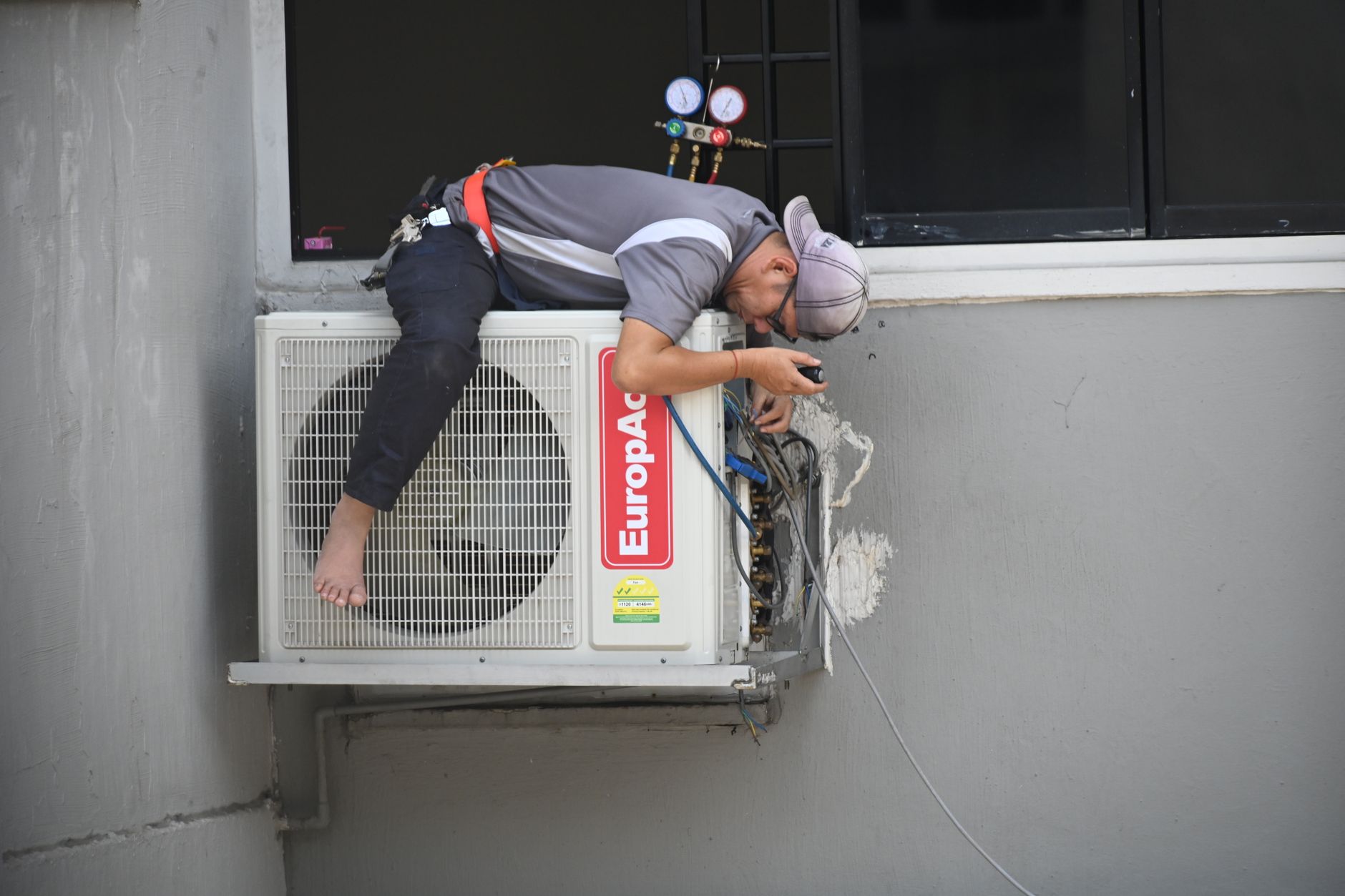
Air-conditioning condensers and heat-pump outdoor units sit exposed on pads and rooftops—exactly where Colorado hail finds them. Bent condenser fins reduce efficiency and can lead to compressor strain or total replacement claims after a single severe storm.
Hail Guards and Covers
Manufacturer-approved hail guards or mesh screens can deflect smaller stones without blocking airflow. Avoid improvised plywood or tight tarps during operation—they restrict cooling and can void warranties. Remove seasonal covers before you run the system.
Placement and Landscaping
Where possible, position new units on the leeward side of the home or under roof overhangs that do not trap heat. Keep shrubs trimmed back for airflow but consider strategic fencing that blocks wind-driven hail without enclosing the coil.
After the Storm
Inspect fins for flattening and listen for unusual fan noise on startup. Photograph damage for insurance documentation. A licensed HVAC technician can comb minor fin damage; severe coil damage may require coil or full unit replacement.
Insurance and Timing
Many Front Range homeowners discover hail damage to HVAC during the same storms that mark roofs. Schedule professional inspections before you sign off on roof-only repairs—pairing assessments saves duplicate service calls.
Centennial, Highlands Ranch, and Parker residents often see peak hail in May and June; early-season protection beats mid-summer emergency replacements.