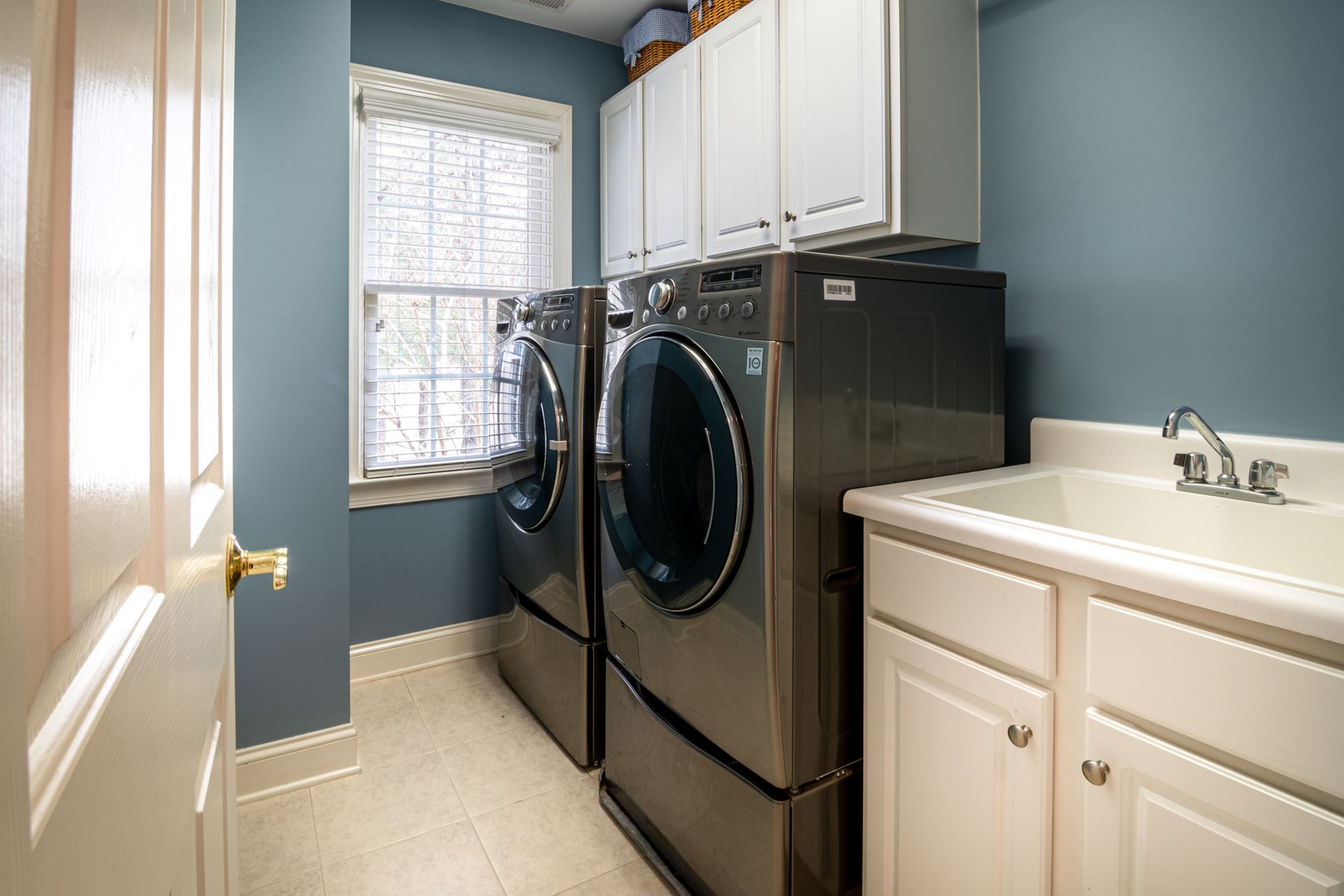
Clothes dryers are one of the most overlooked fire risks in the home. Lint is highly flammable, and when it accumulates in the vent line instead of the trap, a routine load of laundry can become a fire hazard.
Why Vents Clog Faster Than You Think
Long or crushed vent runs, plastic or foil ducting, and multiple elbow bends all slow airflow and trap lint. Homes with dryers vented through long basement or interior runs—common in split-level and finished-basement layouts—are especially prone to buildup between cleanings.
Warning Signs to Watch For
Clothes taking longer than usual to dry, a hot dryer exterior, a burning smell during cycles, or visible lint around the outside vent hood all signal restricted airflow. Any of these warrants an inspection before the next load.
A Simple Maintenance Routine
Clean the lint trap before every load, not just when it looks full. Have the full vent line professionally cleaned at least once a year, or more often for long runs. Replace flexible plastic or foil ducting with rigid or semi-rigid metal duct, which resists sagging and lint accumulation.
Beyond the Vent
Keep the area around the dryer clear of stored items, and never run a load unattended overnight or while away from home. Check the exterior vent hood periodically to confirm the flap opens freely and isn't blocked by nests or debris.
Dryer vent maintenance takes minutes but addresses one of the most preventable causes of residential fires—exactly the kind of routine upkeep that keeps small risks from becoming costly claims.